Quick answer
The best AI UGC ad generator depends on what you need in the frame. Arcads and MakeUGC give you the widest libraries of AI actors reading a script on a subscription; Creatify is the volume pipeline that starts from a product URL and can launch the ads; HeyGen is the avatar platform for explainers and translation; Captions and Icon sit between editing and creator marketplaces. Starrd's Product Ad Studio is the product-first one: it starts from a photo of your product, generates a presenter holding that exact item in a real-looking room, drafts a two-line script, and charges per ad from 100 credits with no subscription.
The Only Question That Matters
Every tool on this list can put a convincing person on screen saying words. The thing that separates them, for a seller, is what is in that person's hands. A viewer on TikTok decides in two seconds whether this is a real recommendation, and the tell is not the face. It is whether the product is the actual product, held like someone owns it, with a label you can read.
So this list is ranked on that first, and on how you pay second.
Prompt used
Ryan, bedroom desk, talk to camera. The chest embroidery survives because the render is anchored to the product photo, not to a description of it.
The Quick Verdict
| Tool | Starts from | Your product in the shot | Who presents | How you pay |
|---|---|---|---|---|
| Starrd Product Ad Studio | One product photo | Held, opened, shown, label preserved | You from a selfie, or eight presenters | Per ad, 100 or 150 credits, no subscription |
| Arcads | A script | Described, not held | 1,000+ stock AI actors | Monthly plan with a video allowance |
| Creatify | A product URL | Composited or B-roll beside an avatar | 1,500+ avatars, custom on higher tiers | Monthly plan with a credit balance |
| HeyGen | A script | A slide or cutout beside an avatar | Stock avatars, or a custom avatar of you | Monthly plan, avatar minutes metered |
| MakeUGC | A script | Described, not held | A UGC-styled avatar library | Monthly plan |
| Captions | A script or an edit | Depends on your footage | Synthetic creators, or your own clip | Monthly plan |
| Icon | A brief | Real product if you go the human route | AI or human creators | Plans, with human UGC priced separately |
1. Starrd Product Ad Studio — Best for a Real Product, One Ad at a Time (Our Tool)
The whole flow is built around the product photo. Upload it, pick who sells it (yourself from one selfie, or one of eight presenters with a fixed look and energy), pick a room and a format, approve the two-line script it drafts, and render. Ten or fifteen seconds, vertical or wide, no music or captions baked in.
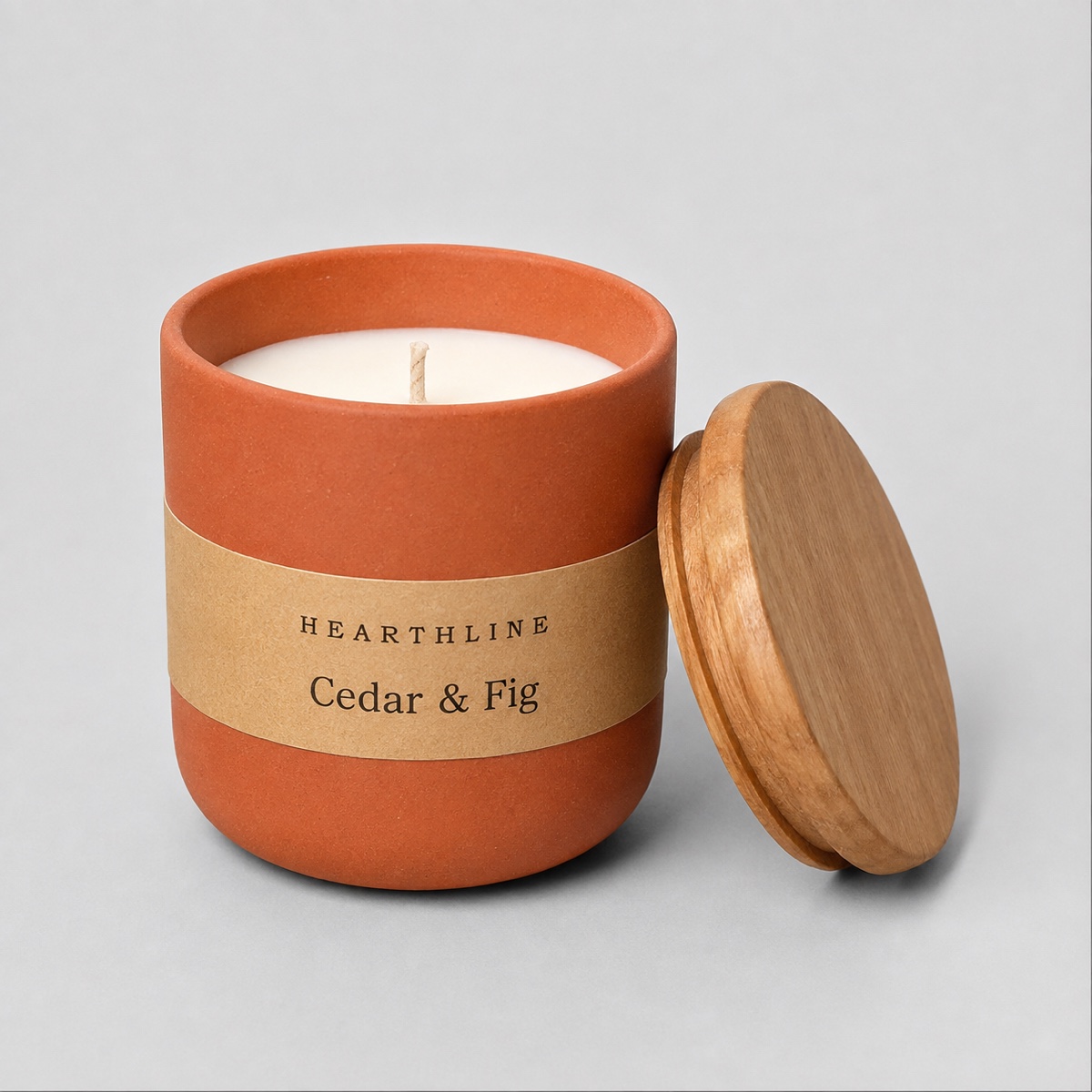

The listing photo is the only input. The jar, the lid and the label carry into every shot, with a dedicated close-up.
Where it is honest about its limits: one ad per submission, no batch mode, no ad launcher, no translation. It does the one clip and hands it to you.
Pricing model: per ad. A 10 second ad is 100 credits, a 15 second ad is 150, and credits never expire, so there is nothing to lose at the end of a month you did not use.
Product Ad Studio
Upload your product, pick who sells it, approve the line. A 10 or 15 second spoken ad with your exact product in it. From 100 credits, no subscription.
2. Arcads — Best Actor Library for Script Testing
Arcads is the tool performance marketers name first, and the reason is the actor library: over a thousand AI actors across ages, ethnicities and settings, several of which are genuinely hard to clock as generated. You paste a script, pick an actor, and have a talking-head ad in a couple of minutes, with commercial rights on every paid plan.
The trade is that it is script-first. The product is talked about, not held, and the pricing is a monthly plan with a set number of videos, which is efficient only if you use the allowance. Read the full Arcads vs Starrd comparison.
Best for: teams testing many hooks a month who want maximum actor variety.
3. Creatify — Best Volume Pipeline for E-commerce
Creatify starts from a product URL. It reads the listing, writes scripts, renders avatar variants in batch from a very large library, adds voiceover in many languages, and on the higher tiers launches the ads and tracks competitors. It is closer to an ad-ops platform than a generator.
The product itself tends to appear composited or in B-roll while the avatar talks, and the credit cost of a render varies with length, avatar and model, which makes the per-ad price hard to predict. Read Creatify vs Starrd.
Best for: an e-commerce ad account that needs dozens of first-pass variants a month, launched from one dashboard.
4. HeyGen — Best Avatar Platform, Not Built for Product Ads
HeyGen has the most photorealistic avatars in the category, a custom avatar of you, strong voice cloning, and translation with lip sync that nobody else matches. If you need an explainer, onboarding video or a talking head in twelve languages, it is the tool.
For a UGC ad it works against you: the register is presentational, the product is a slide or a cutout, and the polish is the thing that gets an ad scrolled past. Avatar video also spends credits by the minute on a monthly plan. Read HeyGen vs Starrd.
Best for: polished avatar video for explainers, training, sales outreach and localisation.
5. MakeUGC — Actor Library Tuned for the UGC Look
MakeUGC is the Arcads-style pick that leans hardest into the casual register: its avatar library is styled for UGC output (bedrooms, cars, phone framing) and it has bulk tools aimed at agencies. Same shape as Arcads otherwise: you supply the script, an avatar reads it, the product is described, on a monthly plan.
Best for: agencies producing UGC-style talking heads at volume who want the casual look without prompting for it.
6. Captions — Best if You Already Film and Edit
Captions started as an editing app (captions, dubbing, eye contact correction) and added synthetic creators that read a script. Its strength is the edit: if you have real footage of the product and want AI to caption, dub and tighten it, it is excellent. As a pure generator it is a smaller actor library on a subscription.
Best for: brands with some real footage who want an editor with AI presenters as an option.
7. Icon — Human Creators With an AI Lane
Icon is a creator marketplace that also sells AI-generated UGC. The human route gets you a real person with your real product, on a timeline and a budget; the AI route is the same script-first actor approach as the rest. Worth knowing about because it is the honest answer when the product must be demonstrated by a person.
Best for: brands that want the option of a real creator and an AI fallback in one place.
Prompt used
The eight Starrd presenters cover everyday to glam; each one has a fixed look and energy, so the same pick renders the same person every time.
How to Choose
- One product, one ad, no plan: Starrd Product Ad Studio.
- Many scripts a month, widest actor choice: Arcads, or MakeUGC for the casual look.
- URL in, ads launched: Creatify.
- Explainers, training, translation, an avatar of you: HeyGen.
- You already film: Captions.
- You might want a real creator: Icon.
Product Ad Studio
Upload your product, pick who sells it, approve the line. Your exact product, in someone's hands, 10 or 15 seconds. From 100 credits.
Related Reading
- How to make a UGC ad with AI from one product photo — the full studio walkthrough.
- UGC ad script examples — 30 hooks and lines that fit the lip sync
- How to make a TikTok Shop product video without filming yourself
- Arcads vs Starrd, Creatify vs Starrd, HeyGen vs Starrd — the head-to-heads.