
Quick answer
To make an AI documentary video about yourself, upload one photo and AI stages the full prestige-documentary treatment: you in the interview chair under cinematic lighting, contemplative B-roll, a swelling score, and a standing ovation finale — graded and framed like an awards-season film, with audio generated in the same pass. Starrd's The Documentary template does it in one tap from a single photo for 100 credits (about $5), no subscription.
What You're Trying to Make
The lights dim. A single chair, cinematic key light, dust in the air. You, looking just past the lens, about to tell your story. Cut to contemplative B-roll. The score swells. By the final shot, an audience is on its feet — for you, for everything you've been through, for the fact that you exist at all.
One photo in, full prestige treatment out.
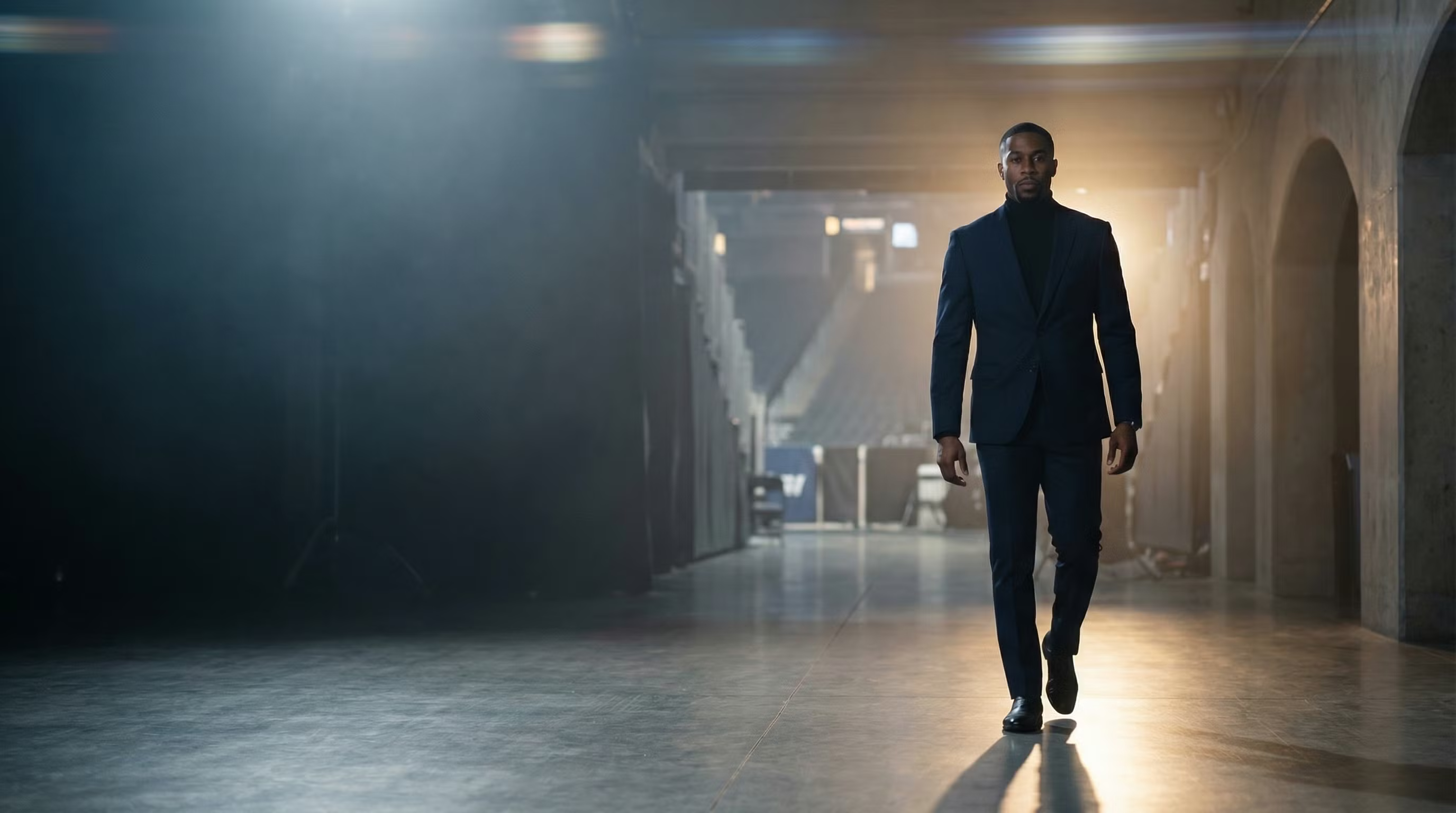
The Documentary
The prestige documentary of YOUR life — interview chair, cinematic B-roll, swelling score, standing ovation. One photo, one tap. 100 credits (about $5).
The Documentary vs. the Netflix Doc
We have two documentary formats, and they're different jokes:
- Netflix Documentary is the mockumentary trend piece — a streaming-app gag where the punchline is the title card. It's a meme about documentaries.
- The Documentary is the straight-faced prestige treatment — cinematic grade, interview chair, score, ovation. It doesn't wink. The comedy (if you want comedy) comes from pointing all that gravitas at something mundane; played straight, it's genuinely a tribute.
If your idea is a punchline, go Netflix Doc. If your idea deserves an ovation — ironically or not — this is the one.
How to Make It (3 Steps)
- Upload one photo. Clear, well-lit, just you. The interview scenes hold tight on your face, so this is the format where photo quality matters most.
- Optional — give it a subject in Director's Notes. "A documentary about surviving the group chat," "40 years of showing up," "the last blockbuster employee." Leave it blank and it builds the arc from your vibe.
- Generate. A few minutes later: a shareable vertical film — chair, B-roll, score, ovation.
The Documentary
From interview chair to standing ovation. 100 credits (about $5) — no subscription, credits never expire.
Prompting It Yourself
The prestige grammar, if you're building it on a raw model:
A prestige documentary film about the person from the uploaded photo, kept recognizable throughout. Cinematic color grade, shallow depth of field, anamorphic framing.[00:00–00:03] The interview: the subject seated in a single chair in a dark studio, warm key light, looking just off-lens. They take a breath, about to speak. Faint room tone, a distant piano note.
[00:03–00:06] B-roll: the subject by a window in golden-hour light, contemplative; slow push-in. The score begins — sparse piano building to strings.
[00:06–00:09] Archival-style beat: the subject walking away from camera down an everyday street, treated like history being made. Score swelling.
[00:09–00:12] The finale: a theater audience rises in a standing ovation; the subject on stage, lit by a spotlight, overwhelmed. Score peaks, applause thunders, cut to black.Audio: room tone, a building orchestral score, thunderous applause at the end. No narration — the images carry it.Avoid: face drift, morphing, comedic mugging, text overlays, watermark artifacts.
Restraint is the format. No narrator, no title cards, no jokes in frame — the score and the ovation do everything. The funnier your intent, the straighter the video should play it.
Common Mistakes
- Winking at the camera. The second the video acknowledges the joke, it becomes a sketch. Prestige plays it straight.
- A weak photo. Tight interview framing amplifies every flaw in the source image. Sharp, well-lit, no sunglasses.
- Overstuffing the arc. Chair → B-roll → walk → ovation. Four beats. More beats, less gravitas.
- No AI label. Required on every platform.
Related Reading
- How to Make a Netflix Documentary AI Video — the mockumentary sibling: streaming thumbnail, punchline title.
- How to Make a Red Carpet AI Video — the other "treat me like a star" format.
- How to Make a Skyfall AI Video — cinematic slow-motion drama, same energy, more falling.
