Quick answer
Upload one clear photo to Starrd's Rocketeer template and it generates a full-body clip of that person doing the Rocketeer dance — the bouncy, shoulder-led groove TikTok built on 'Rocketeer' by Far East Movement featuring Ryan Tedder, with the hands flicking out on 'here we go' and the arms swinging wide on 'come with me' — mapped move-for-move and synced to the sound. It costs 100 credits (about $5), works on any subject, and there's no prompt to write.
The same dance, any subject — tap one to make it with your photo.
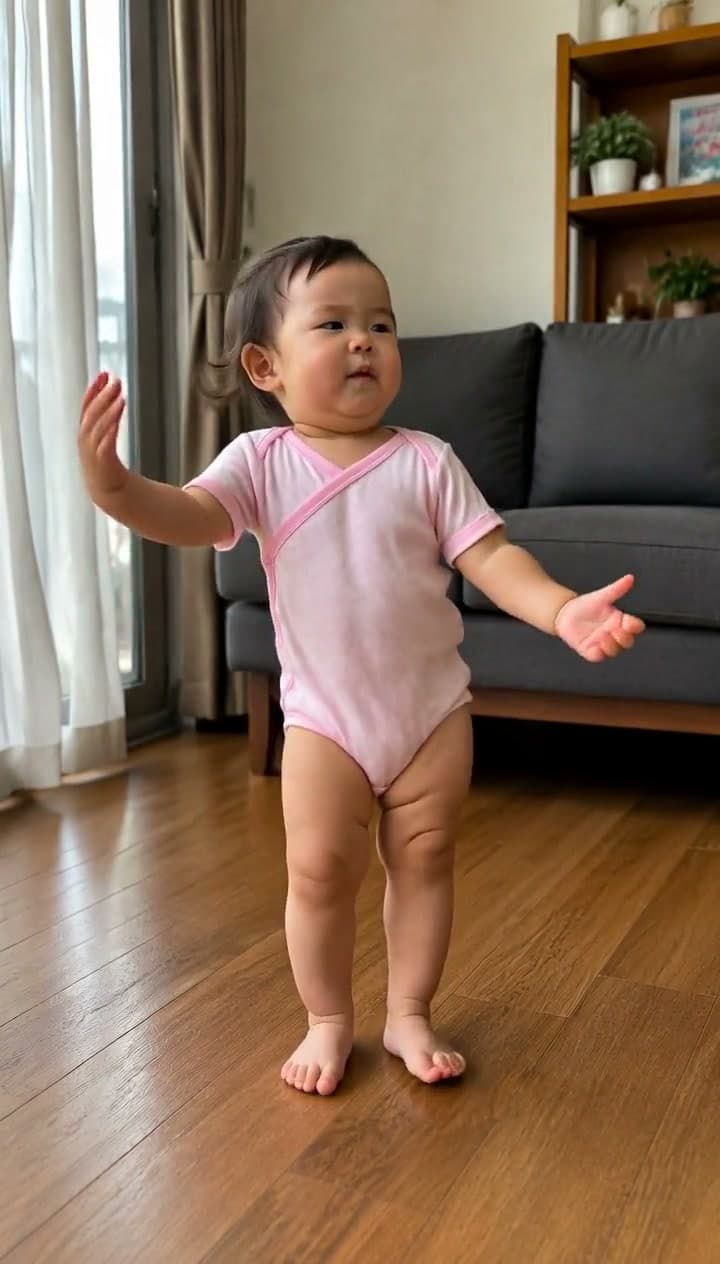
One photo in, and out comes that person doing the Rocketeer dance — the bounce, the shoulders riding the beat, the hands flicking out on "here we go," both arms thrown wide on "come with me." Here's exactly what you get:
Rocketeer
Drop any photo and watch them bounce through the Rocketeer dance — 'here we go, come with me,' mapped move-for-move and synced to the track. One tap, no prompt.
What the Song Is
"Rocketeer" by Far East Movement featuring Ryan Tedder, originally released in 2010. TikTok pulled it back out in 2026 and it became a viral dance sound — fifteen years after the fact, which is why the title alone still mostly surfaces the original music video instead of the trend.
The hook people dance to is the chorus:
"Here we go, come with me — there's a world out there that we should see."
That line is the whole structure of the routine. "Here we go" is a hands-out cue; "come with me" is the opening.
The "Here We Go Come With Me" Dance, Beat by Beat
Loose. Bouncy. Full-body groove rather than counted eight-bars — which is the key thing to know before you pick a subject.
- Bounce-step in place. The feet barely travel; the whole body rides up and down on the beat.
- Shoulders on the beat. The bounce reads in the shoulders as much as the knees — this is what makes it look like a groove and not a step routine.
- Hands point and flick at chest height on "here we go." Small, quick, close to the body.
- Arms swing wide open on "come with me." The one big move in the whole routine, and the one that sells it.
On TikTok it gets tagged with Camden Bop, Nola Bounce and Get Lite energy — freestyle bounce traditions where the groove lives in the bounce and the hands, not in footwork patterns. That family of movement is exactly why the sound picked up a dance in the first place.
Why It Works on Almost Any Subject
Because the feet stay planted. A routine that travels across a floor needs a body that can do it; a routine that bounces in place and works through the hands maps onto subjects a big athletic dance would break — a toddler, a dog, grandma, someone who has never danced on camera in their life.
The demo above is a toddler in a pink onesie bouncing through it in a living room. That's the format working as intended: a groove full of swagger performed by someone with absolutely none of it.
Only upload photos of your own child. Keep it family-friendly, label it as AI per each platform's rules, and think about whether you want your child's face on a public post versus shared with family. The full safety rundown is in the AI baby dance guide.
How to Make It (3 Steps)
- Pick one clear photo. One subject, front-facing, good light, as much body visible as possible. This is the whole quality lever.
- Open the Rocketeer template on Starrd — it's in the Dance category.
- Upload and generate. You get a vertical 9:16 clip, about 15 seconds, of your subject performing the routine synced to the track. 100 credits, about $5. No subscription, credits never expire.
The casting is the content. A straight self-insert is fine, but the least likely dancer in your camera roll usually beats it — the arms-wide "come with me" is a lot funnier coming from someone who would never.
No CapCut Template, No Motion Source Hunting
Most of the versions on TikTok come from CapCut templates and dance filters that run on motion transfer: your photo gets stretched over a dance skeleton. It holds up through the bounce and falls apart on the chorus — arms swinging wide past the body is precisely where the face smears and the hands melt.
Starrd's template skips that. The original dancer's performance is baked into the template as a driving clip, and instead of bending your photo, it regenerates a clean full-body performer that looks like your subject and drives that on motion control. The face stays consistent through the whole groove, and every bounce lands on the beat because it's a real performance, not a text prompt guessing at timing.
Rocketeer
The full routine from one photo — clean, on the beat, face intact. About 15 seconds, real trend audio. 100 credits, about $5.
Common Mistakes
- A blurry or group photo. One subject, sharp, front-facing. This decides everything.
- Muting the song. The hook is the trend — the template keeps the track in.
- Posting horizontal. It's a 9:16 format. The template already outputs vertical.
- Captioning it only "Rocketeer." That word pulls a 2010 single, a Disney film and a decade of unrelated posts. Put "here we go come with me" or the dance name in the caption so it files with the trend.
- Skipping the AI label. Every major platform requires it, and the clip travels fine with it.
Related Reading
- How to Make an AI Dance Video — the pillar guide: every named routine in the dance library, same one-photo workflow.
- AI Baby Dance Videos: How to Make One From a Photo — the baby-dance genre guide, including the photo and safety basics.
- How to Make the That's The Jawn AI Dance — the other loose bop that maps cleanly onto babies and pets.
- How to Make the Don't Play With Me AI Dance — the gospel hook behind the AI baby dance wave.
- How to Make Your Pet Dance With AI — the dancing dog/cat cut of the format.
- Browse all dance templates →